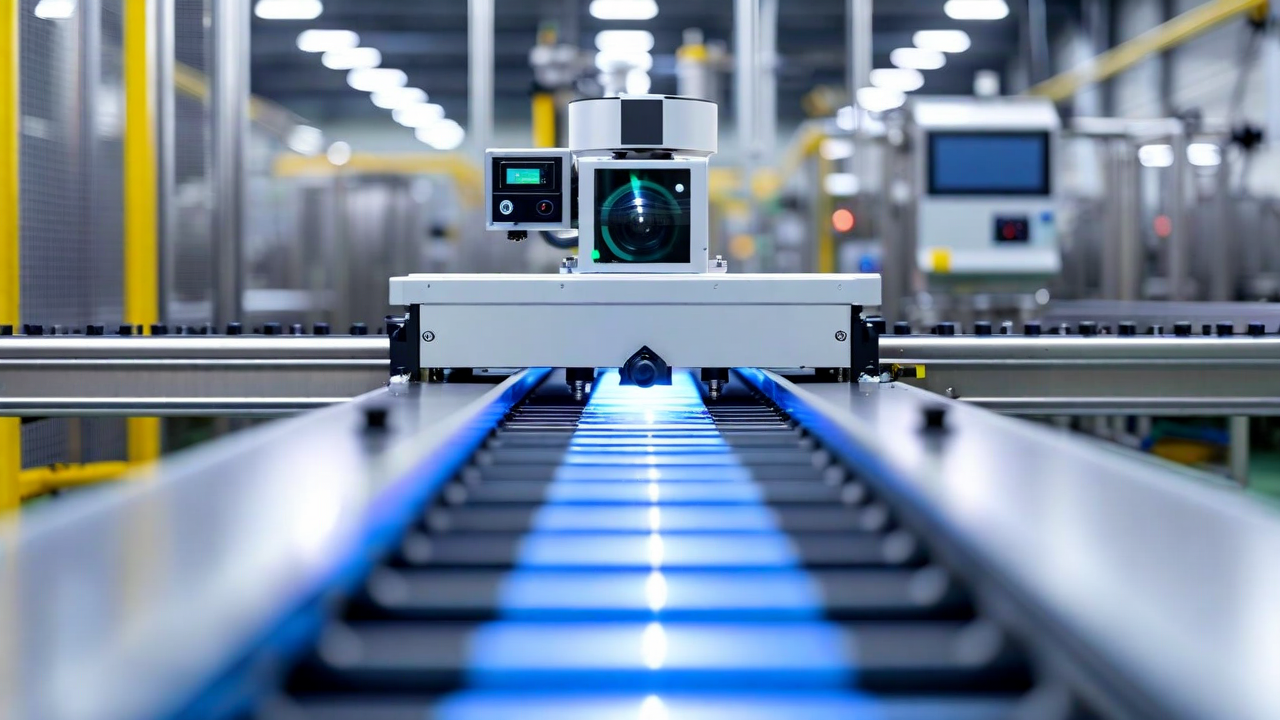
We see the camera selection mistake regularly during site assessments. Someone specced out a high-megapixel area scan camera for a fast conveyor because it looked impressive on paper. The resolution is there. The sensitivity is there. But at 800mm per second belt speed, every image has motion blur equivalent to 4-6 pixels of horizontal smear. Hairline cracks running parallel to belt direction are invisible. The inspection system passes parts it should fail, and no amount of model retraining fixes a hardware limitation.
Getting camera selection right is upstream of everything else in a vision system. Model quality, lighting design, and processing speed all depend on the image inputs. Start with bad data, end with bad results.
Resolution: What You Actually Need
The first question is minimum defect size. Not average defect size, minimum. If your process produces cracks that start at 0.15mm width, your system needs to detect 0.15mm cracks reliably before they propagate. That sets your spatial resolution floor.
A useful rule of thumb: the smallest detectable feature should span at least 3 pixels in your image. That provides enough contrast gradient for reliable edge detection. So for a 0.15mm crack, you need a pixel pitch of 0.05mm or finer at working distance - meaning 50 microns per pixel or better.
For a 200mm x 150mm field of view, 50 microns per pixel requires a sensor capable of 4,000 x 3,000 pixels - approximately 12 megapixels. A 5MP sensor at the same working distance gives you 80-90 micron pixels, which is marginal for 0.15mm features and will produce inconsistent detection at the edges of your defect size range.
Part size matters too. A 400mm x 300mm field of view with the same 50-micron resolution requirement needs a 24MP sensor or you split the coverage into two camera stations. Two cameras add complexity but are often cheaper than a single high-resolution sensor with a larger, more expensive lens.
Frame Rate: The Conveyor Math
Belt speed and part size determine your minimum frame rate. The constraint is ensuring every point on every part surface appears in at least one image with acceptable sharpness.
For area scan cameras, the exposure time has to be short enough to limit motion blur below one pixel. At 600mm/second belt speed and 50-micron pixel pitch, maximum allowable exposure is 50 microns / 600mm per second = 83 microseconds. That is not a fast exposure for most industrial sensors - you need enough light at 83 microseconds to get adequate SNR. This drives lighting intensity requirements up sharply. Strobed LED illumination at 5-10 times the steady-state intensity during the 83-microsecond exposure window is the standard approach.
For part-at-a-time inspection where the conveyor stops, the frame rate constraint relaxes. You have 200-500 milliseconds of settle time to capture a sharp image. A 5fps camera is perfectly adequate. The tradeoff is throughput - stopped-conveyor inspection limits line speed to your cycle time.
Line Scan vs Area Scan
At belt speeds above 400mm per second with continuous-feed parts, line-scan cameras are worth serious consideration. A line-scan camera captures one row of pixels per exposure. At 10,000 lines per second (10kHz line rate), belt speed of 600mm per second gives 60mm travel per 100 lines - effectively 6mm of vertical resolution per millisecond of scan time. There is no motion blur because each line is captured essentially instantaneously.
Line-scan sensors in the 4096-12288 pixel range are common in industrial inspection. A 4096-pixel sensor at 50-micron pitch covers a 205mm field width. Cost is moderate - a 4K line-scan camera with GigE interface runs $800-$2,500 depending on sensor generation and vendor. The lighting requirement is different: you need a bright, focused line illumination perpendicular to motion direction, which typically means a fiber-optic line light or a focused LED bar.
Area scan is simpler to configure and better for stationary inspection. Line scan handles high-speed continuous web and conveyor inspection more cleanly. If you are running a food packaging line at 1,200 packs per minute, area scan will struggle. If you are inspecting precision castings in a robot-fed cell that indexes every 4 seconds, area scan is fine.
Sensor Type: Global vs Rolling Shutter
Rolling shutter sensors read pixel rows sequentially. On a moving part, this introduces a spatial distortion - parts appear skewed because the top and bottom of the image were captured at different moments. At 600mm/second belt speed and 10ms rolling shutter readout time, distortion is roughly 6mm across a 200mm field. That is not acceptable for dimensional measurement and will cause false edges in surface inspection.
Global shutter sensors capture all pixels simultaneously. They cost more - typically 1.5-2.5x the price of equivalent-resolution rolling shutter sensors - but they are the correct choice for any inspection application where parts are moving during capture. This is not a situation where you can tune your way around a hardware limitation.
Interface Bandwidth
Resolution and frame rate multiply together into data bandwidth. A 12MP camera at 30fps generates approximately 1.1 Gbits/second of raw image data. GigE Vision handles up to 1Gbps, which barely keeps pace. USB3 Vision handles 4.8Gbps. CoaXPress and 10GigE are necessary for higher-speed or multi-camera configurations. Make sure your cable, switch, and host PC NIC can handle sustained throughput before you finalize the camera spec - dropped frames at 60fps are hard to diagnose in post.
Camera selection is an engineering decision, not a procurement one. Resolution, frame rate, shutter type, and interface bandwidth need to follow from your line speed, defect specification, and field of view - in that order. Get those parameters documented before you look at a camera datasheet.
Not sure what camera spec your line needs?
We assess line speed, defect size requirements, and field of view during our demo process and specify the right hardware configuration before any purchase decision.
Talk to an Engineer