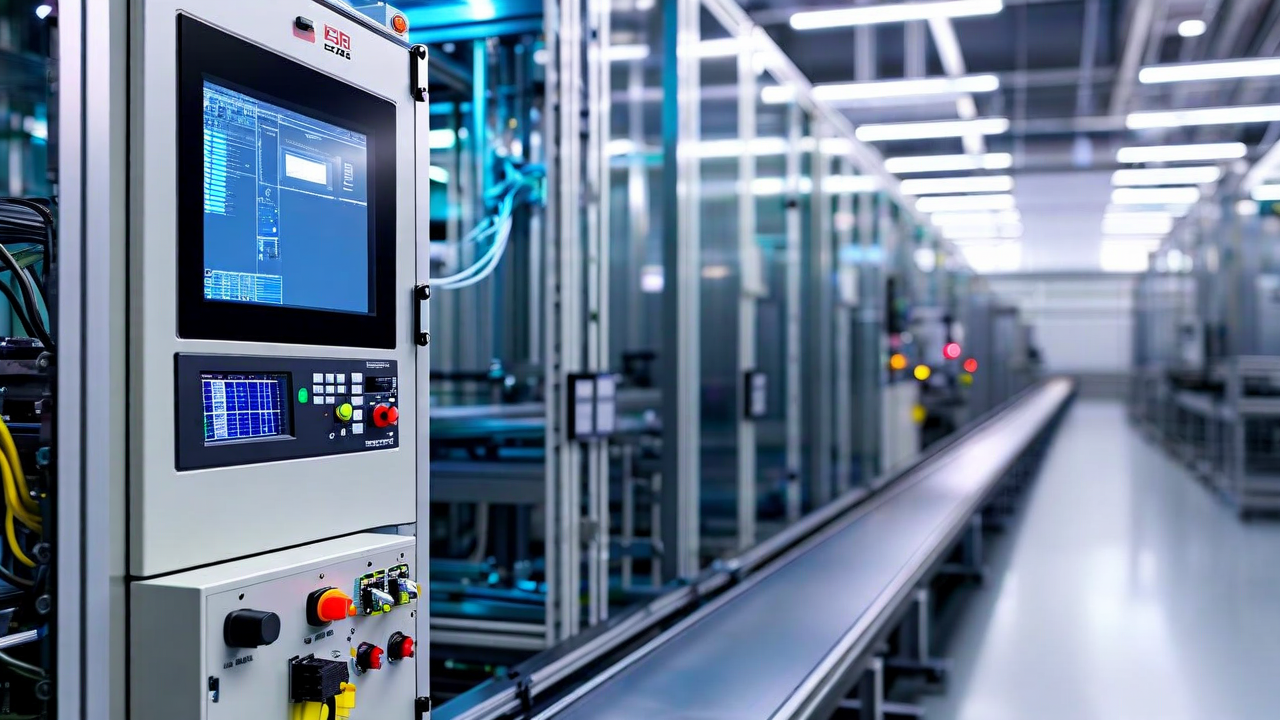
The question of where to process inspection images comes up in almost every deployment conversation. Cloud processing sounds appealing because it offloads hardware and maintenance responsibility. Edge processing sounds appealing because it is local and fast. The correct answer is almost always determined by one number: your required decision latency.
If your inspection system needs to trigger a reject actuator within 200 milliseconds of a part passing the camera, the decision has to happen on local hardware. Not because cloud processing is unreliable, but because round-trip latency to any remote processing location - including an on-premise data center on the other side of the plant - is not deterministic. Network variance plus remote processing queue depth plus transmission overhead does not reliably fit inside a 200ms window on a busy factory network.
Latency Requirements by Application
Real-time inline inspection with active ejection requires end-to-end latency under 150-300 milliseconds, depending on conveyor speed and part spacing. At 600mm per second belt speed with 200mm part spacing, you have a 333ms window between the camera trigger and the point where the next part enters the inspection zone. The reject actuator has to fire before that window closes. Edge processing with a local GPU or accelerated inference chip delivers deterministic sub-50ms inference latency. That is compatible. Remote processing introducing 80-200ms of network jitter on top of inference time is not.
End-of-shift statistical reporting, traceability record upload, model performance monitoring, and cross-line defect trend analysis do not need to happen in milliseconds. These are batch workloads. Cloud processing is appropriate for all of them.
The architecture that matches these requirements is local edge hardware for real-time inference, with asynchronous image and result upload to central storage for everything that does not need to be fast. This is not a tradeoff - it is the right tool for each job.
Edge Hardware Options
Edge inference hardware for vision inspection falls into three categories based on compute density and cost. GPU-equipped industrial PCs are the most flexible - a compact system with an Nvidia RTX 4000 Ada class GPU can run multiple inspection models simultaneously at 30-60fps per model, handles multi-camera configurations, and costs $4,000-$8,000 for the compute unit. These are appropriate for complex inspection tasks or multi-camera stations.
Purpose-built vision processing units are more constrained but more compact and ruggedized. They typically run 1-4 inference pipelines at 15-30fps, require less thermal management, and fit in smaller enclosures - relevant when cabinet space is tight. Cost is usually $1,500-$4,000.
For simpler single-defect-class inspection at lower throughput, a GPU-equipped embedded system delivers adequate inference speed at $500-$1,200. The limitation is model complexity: these units handle straightforward binary accept/reject tasks but struggle with multi-class defect detection or simultaneous inspection types.
Network Connectivity and Factory WiFi
Factory wireless networks are not designed for deterministic latency. Interference from welding equipment, motors, and adjacent RF sources creates unpredictable packet loss and retransmission delays. A system that works reliably on wired Ethernet may fail unpredictably over WiFi in a heavy manufacturing environment. Wired GigE or 10GigE connections between cameras and edge hardware are standard practice for any inspection application requiring real-time response. Wireless is acceptable for monitoring dashboards and data upload, not for the image acquisition and inference loop.
The practical implication is that edge hardware needs to be physically close to the inspection station - within cable run distance. A central server in a control room 200 meters away connected by WiFi is not an edge deployment, it is a remote deployment with extra latency.
Where Cloud Processing Adds Value
Central model management is the clearest win for cloud infrastructure in inspection deployments. When you have 15 inspection stations across multiple plants running the same part family, updating models, pushing threshold adjustments, and monitoring performance across all of them from a single interface is significantly more manageable than updating each edge device individually.
Cross-line defect analytics benefit from centralized data aggregation. Correlating defect rates with supplier batch numbers, shift patterns, tooling age, or environmental conditions requires collecting data from multiple lines into a single queryable dataset. That is a data warehousing problem that cloud infrastructure handles well.
Model retraining requires significant compute that is uneconomical to provision at each edge site. Collecting images from edge devices, aggregating them centrally, running retraining jobs, validating the updated model, and pushing it back to edge devices is a workflow that belongs in centralized infrastructure.
Hybrid Architecture in Practice
A typical multi-line deployment runs edge hardware at each station for real-time inference and local reject actuation. Images and results are buffered locally and uploaded to central storage on a continuous basis - not synchronously in the inspection loop. The central system handles model management, fleet monitoring, and analytics. Edge devices pull updated models during shift changeovers or scheduled maintenance windows, not mid-production.
The failure mode to avoid is making the central connection a dependency for production operation. If the network goes down, edge devices need to continue inspecting. They should fail closed - meaning they hold the last known good model configuration and continue running - not fail open, which would mean passing uninspected parts. Network dependency in the critical path is an uptime risk that most production operations are not willing to accept.
Designing an inspection system for your line?
We can walk through the architecture requirements for your specific throughput and latency needs. Getting the processing topology right before hardware selection saves significant rework.
Discuss Your Requirements